taste of paris, 10th edition (part 1)
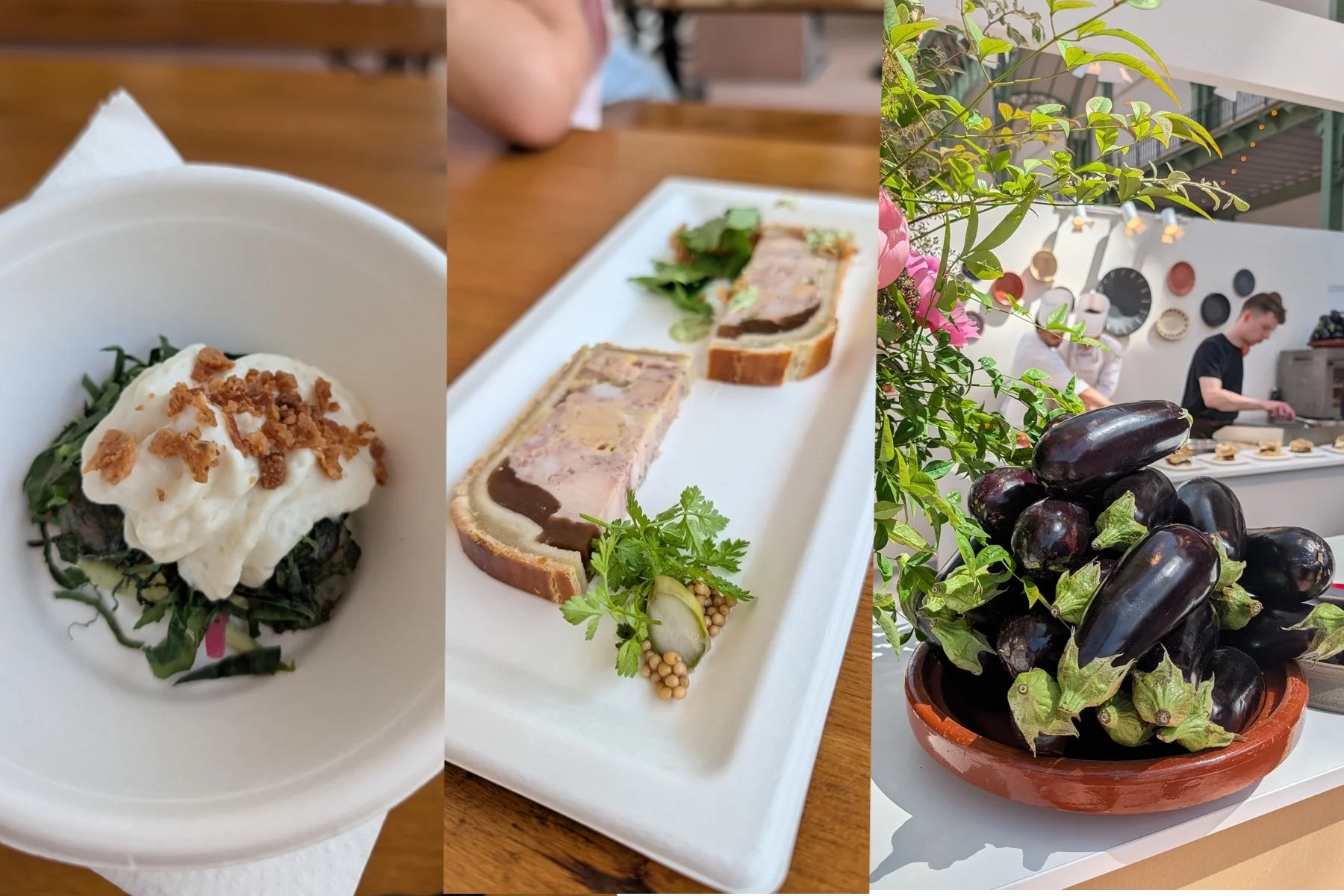
from left: Thibault Spiwack’s Escargots, pâté en croûte by Maison Verot, a touch of fresh details.
Inside the Grand Palais, originally built for the 1900 Exposition Universelle, another highly anticipated Parisian event took centre stage this spring. A quick look at the queues forming before opening time was enough to understand just how firmly “Taste of Paris” had established itself within the city's culinary calendar.
From May 21st to 24th 2026, lunch and dinner services brought together some of France's most celebrated chefs alongside international culinary talents, each presenting signature dishes from dedicated stands throughout the exhibition hall.
The setting itself could hardly have been more fitting, because beneath the vast glass roof of the Grand Palais (which is one of the largest in Europe!) natural light flooded the venue, lending an unusual clarity to both the dishes and the space itself.
Throughout the four-day festival, the Grand Palais remained in constant motion: cooking workshops, masterclasses, live demonstrations and musical performances unfolded simultaneously across the exhibition floor, while visitors moved between chef stations, tasting counters and temporary kitchens. From an elevated lounge above, it was possible to observe the choreography of the event from a distance (glass of champagne in hand, why not!?)
“Taste of Paris” has not been entirely free from discussion in recent years: some observers have questioned the presence of certain commercial sponsors and partners. While those conversations remain part of the event's broader context, they should not eclipse the work of the hundreds of people who bring a festival of this scale to life.
Among them, I found myself particularly drawn to the students of Ferrandi Paris. Young, focused and seemingly tireless, les élèves moved through the intensity of service with remarkable discipline. Working under the guidance of Michelin-starred chefs and some of the most respected figures in French gastronomy, they occupied a curious space between student and professional. Watching them navigate the pressures of a major public event, it became clear that they represented far more than culinary apprentices, more like the backbone of the event.
THIBAUT SPIWACK: A CUISINE ROOTED IN NATURE
The first chef I had the opportunity to meet was Thibaut Spiwack. Born in 1986, he has become one of the most recognizable figures of a new generation of French chefs whose work is closely associated with sustainability and environmental awareness.
Despite the relentless pace of service and the heat rising from the kitchens, he remained remarkably approachable and generous with his time. What struck me most was the coherence between the image he projects and the cuisine presented on the plate.
His dish reflected a strong connection to nature, I tried the escargots and this was a dish that revealed itself in layers.
A delicate crispiness arrived first, carried by the garlic nougatine, before giving way to a creamy texture and a fresh sweetness that never overwhelmed the plate. Bright, lightly acidic, bringing energy to the composition. I consider this to be a perfectly suited dish to a warm spring day. The escargots were generous in size, deeply satisfying and well hidden at the bottom if the plate, like a final reward.
The result was fresh and deeply vegetal looking. The cream blended harmoniously with the sauce while the escargots remained satisfyingly tender and precise in texture.
What I appreciated most was the balance. Nothing felt excessive or ornamental. Every component appeared carefully considered, creating a dish that felt both playful and thoughtful while remaining firmly connected to the natural world.
GABRIELE RAVASIO: PRECISION AND ELEGANCE
Among the chefs present at Taste of Paris, Gabriele Ravasio was one of the most memorable discoveries.
Elegant, composed and understated, he brought a quiet confidence that contrasted with the intensity of the surrounding event. As fellow Italians, we naturally exchanged a few words in our native language, which added a personal dimension to the encounter.
Originally from the Milan area, Ravasio has built an impressive international career and today leads the kitchen of the Gordon Ramsay restaurant in Versailles. His culinary identity appears shaped by multiple influences, combining Italian roots with a broader international perspective.
That openness could also be felt in the dish he presented.
A smoked sea bream tartare arrived beneath a veil of aromatic smoke. Once it had dissipated, the green sauce was poured over the fish, revealing additional layers hidden beneath. A combava-infused ratatouille provided depth and freshness, while delicate rice crisps added texture and contrast.
The first impression was bright acidity, followed by increasingly complex aromatic notes that subtly recalled Asian flavours. Despite its apparent simplicity, the dish revealed remarkable precision and thoughtful construction.
Fresh, elegant and surprisingly complex, it felt like a journey between the Mediterranean and Asia interpreted through a contemporary French lens.
End part 1
